Defining onchain generative infrastructure
The term "onchain generative" often gets conflated with the early days of generative art, but the infrastructure requirements for AI agents are fundamentally different. To build for this space, you must distinguish between deterministic on-chain art and non-deterministic AI agents. This distinction dictates whether you are optimizing for gas efficiency or computational throughput.
Deterministic on-chain art, such as SVG NFTs, relies on code that produces the exact same output every time it is executed. If you deploy a smart contract that generates an SVG based on a seed value, the result is fixed. This approach is efficient because it leverages the blockchain's statelessness. Developers typically use libraries like Viem to interact with view functions that query this deterministic data. The cost is low, and the verification is trivial: anyone can re-run the code and confirm the image matches the hash.
In contrast, AI agents operate on non-deterministic principles. When an LLM generates text or makes a decision, the output varies slightly even with the same prompt. This unpredictability makes pure on-chain execution impractical for most AI tasks due to the high gas costs and the inability to verify complex neural network weights on-chain. Instead, AI agents interact with on-chain economies by triggering transactions based on off-chain reasoning. The infrastructure here focuses on reliable data feeds, secure oracle mechanisms, and low-latency execution layers rather than storing the AI model itself on the ledger.
Understanding this split is critical for market strategy. Projects building deterministic generative assets can focus on minimal, gas-optimized contracts. Projects building AI agents must prioritize infrastructure that bridges off-chain intelligence with on-chain execution, ensuring that the agent's actions are verifiable and secure without trying to run the model directly on the blockchain.
Choosing the right rendering format
When building on-chain generative art, the choice of rendering format dictates your gas budget and your audience. SVG dominates the space because it is lightweight, deterministic, and natively supported by every modern browser. Unlike raster images, SVG code can be stored directly on-chain without exploding transaction costs.
To see why this matters, compare the technical constraints of the three most common formats for on-chain storage. The difference in gas efficiency is stark, and the trade-offs in rendering complexity are significant.
| Format | Gas Cost | Rendering Complexity | Determinism |
|---|---|---|---|
| SVG | Low | Low | High |
| PNG | Very High | None (Static) | N/A |
| JSON | Medium | High (Requires JS) | Medium |
SVG files are essentially text-based vector instructions. A simple geometric pattern might only take a few hundred bytes, keeping minting costs minimal. PNGs, by contrast, are binary blobs. Storing a high-resolution PNG on-chain requires encoding it as base64, which bloats the transaction payload and burns through gas reserves. JSON offers a middle ground for complex algorithms, but it shifts the rendering burden to the client, introducing variability in how the art appears across different browsers or devices.
The goal is to keep the art self-contained and predictable. SVG achieves this balance perfectly, allowing the blockchain to act as the source of truth for both the data and its visual representation.
Deploying generative art contracts
Deploying a generative contract is less about minting and more about ensuring the math renders correctly on-chain. The goal is to embed the generative logic directly into the smart contract so the image generates itself whenever it is viewed. This approach guarantees that the artwork remains accessible and unchangeable, regardless of external servers or link rot.
1. Design the generative logic in Solidity
Start by writing the core generation algorithm in Solidity. This logic determines how traits are selected and combined. Because EVM execution costs gas, you must keep the computation lightweight. Avoid heavy loops or complex mathematical operations that could cause the transaction to fail or cost too much to execute.
2. Implement view functions for gas efficiency
Never use standard transactions to render the art. Instead, implement the generation logic as a view or pure function. These functions read the state without modifying it, meaning they cost zero gas for the user. When a user or a marketplace calls this function, the contract calculates the SVG output instantly and returns it. This is the single most important optimization for on-chain art.
Always use view functions for rendering logic to avoid gas costs for users. Ensure URL character encoding is handled correctly to prevent broken links.
3. Generate and encode the SVG output
The contract should return the generated art as a string, typically in SVG format. Since blockchains store data as bytes, you must ensure the SVG string is properly encoded. Use Viem or similar libraries to handle the conversion from Solidity strings to the byte arrays expected by the blockchain. Incorrect encoding can result in broken images or corrupted data on-chain.
4. Deploy and verify the contract
Once the logic is tested locally, deploy the contract to your target EVM chain. Use a block explorer like Etherscan to verify the source code. Verification allows others to audit your generation logic and ensures that the view functions behave exactly as documented. This transparency builds trust with collectors who are buying the on-chain integrity of the piece.
5. Test the rendering pipeline
Before launching, test the entire pipeline. Call the view function directly from a script or the block explorer to ensure the SVG is valid. Check that special characters in the SVG (like < and >) are properly escaped. A single encoding error can break the image for everyone. Use a simple HTML wrapper to preview the output locally before relying on the chain.
Building autonomous onchain agents
The shift from static smart contracts to autonomous onchain agents represents a fundamental change in how we interact with blockchain infrastructure. Instead of waiting for a human to sign a transaction, an agent can monitor on-chain data, make decisions based on predefined logic, and execute trades or interactions in real-time. This autonomy is powered by standard web technologies like TypeScript, combined with libraries that abstract the complexity of blockchain communication.
At the core of this architecture is Viem, a modern TypeScript interface for Ethereum. Viem allows developers to read on-chain state and write transactions with type safety and precision. An agent typically runs a loop that queries view functions—read-only operations that don’t cost gas—to check conditions like token prices or inventory levels. When those conditions are met, the agent constructs a transaction using Viem’s contract interaction utilities and signs it with a private key, submitting it to the network for execution.
This setup turns the blockchain into a programmable environment where AI agents act as the drivers. By combining off-chain reasoning (often via LLMs) with on-chain execution, developers can build systems that react to market movements, manage liquidity, or execute complex DeFi strategies without constant human oversight. The reliability of these agents depends heavily on the integrity of the on-chain data they consume, which, as noted by Chainlink, is secured by distributed nodes agreeing on validity before appending to the ledger.
Pricing and liquidity for generative assets
Pricing on-chain generative assets requires a shift from static valuation to dynamic mechanics. Unlike traditional digital art, agent-based tokens derive value from utility and ongoing compute costs. You must account for the gas overhead of on-chain generation when setting your floor price. A common mistake is underestimating the cost of view functions that trigger complex SVG or model outputs.
Liquidity management is equally critical. If your asset relies on an oracle for pricing, ensure the data feed is robust against manipulation. As noted in industry analyses, distributed nodes must agree on validity before appending data, providing a single source of truth for participants [src-serp-6]. This integrity is what allows agents to trade autonomously without constant human oversight.
When listing, consider using a hybrid model: a fixed price for basic access and a Dutch auction for premium, high-compute generations. This approach captures early adopter interest while allowing the market to discover the true value of your agent's output capacity.
Essential tools and resources
Building an onchain AI agent requires stitching together three distinct layers: the model, the blockchain interface, and the data storage. You can’t rely on generic LLM wrappers; you need specific libraries that understand how to sign transactions and manage persistent state.
The Core Stack
Start with Viem for the blockchain layer. It provides the low-level primitives needed to construct and sign transactions securely, which is far more reliable than older libraries for complex agent actions. Pair this with OpenAI or a similar provider for the reasoning engine. The agent needs to interpret onchain data (like token balances or NFT ownership) and convert that into a transaction payload.
Persistent Memory
An agent without memory is just a stateless script. Use Highlight to handle onchain file storage. The Highlight File System client allows you to upload and manage generative art or agent state directly on-chain, ensuring your agent’s context persists across sessions. This is critical for agents that need to remember user preferences or previous interactions.
Recommended Tools
To get started quickly, you’ll need a robust development environment. The following tools are commonly used by developers building these systems:
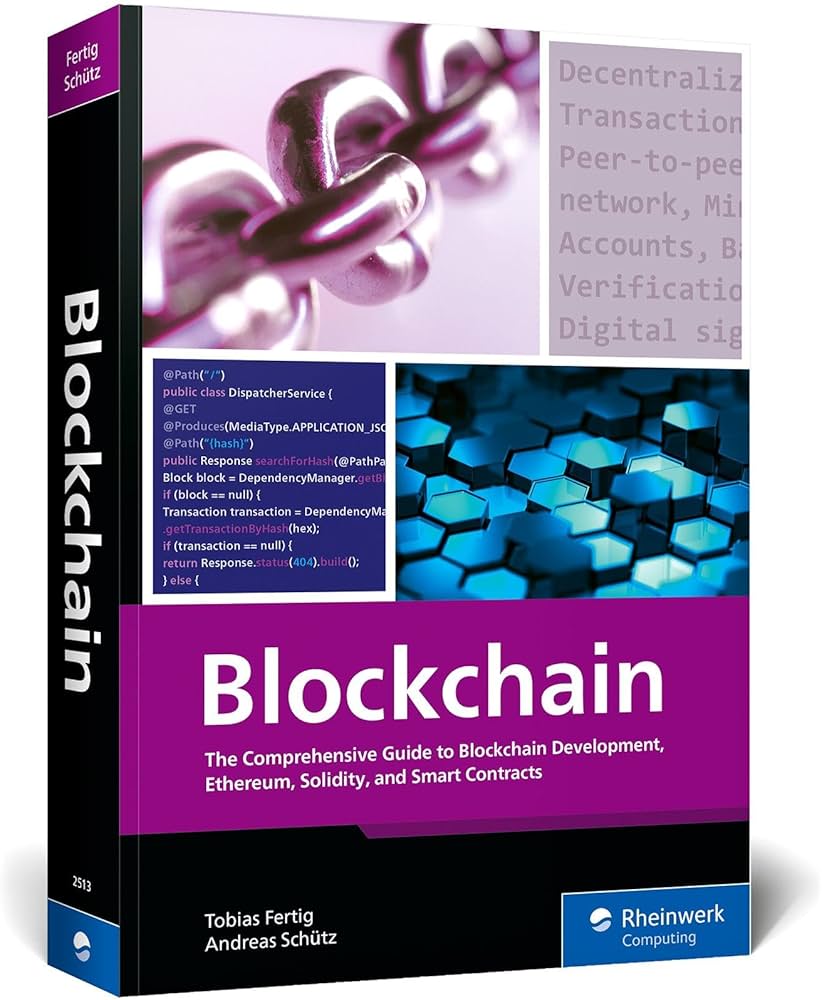

As an Amazon Associate, we may earn from qualifying purchases.
No comments yet. Be the first to share your thoughts!