Defining onchain generative infrastructure
The term "onchain generative infrastructure" describes the cryptographic and computational layers that allow artificial intelligence to operate directly within a blockchain's execution environment. This is not merely a frontend wrapper connecting a user to an offchain API; it is the integration of generative logic into the consensus or execution layer itself. When infrastructure is truly onchain, the generation, verification, and storage of data occur as immutable, verifiable transactions on the ledger.
This distinction is critical for financial and technical applications. Offchain AI models, while powerful, introduce a "black box" problem where the reasoning process is opaque and unverified. In contrast, onchain generative systems leverage smart contracts to enforce deterministic outcomes or provide cryptographic proofs of model inference. This shift moves AI from a centralized service provider to a decentralized, auditable protocol component.
Building this infrastructure requires solving the high cost of computation and the latency of consensus. Current approaches often use zero-knowledge proofs (ZKPs) to verify offchain model outputs onchain, or they utilize specialized virtual machines designed for heavy tensor operations. The goal is to create a system where AI agents can autonomously interact with financial instruments, execute trades, or manage data streams without relying on trusted third parties.
The economic implications are significant. By removing intermediaries, onchain generative infrastructure reduces friction in automated decision-making. It enables new business models where AI agents can hold assets, sign transactions, and participate in decentralized finance (DeFi) protocols as first-class citizens. However, this also introduces new security vectors, requiring robust cryptographic guardrails to prevent manipulation and ensure the integrity of autonomous decisions.
TechnicalChart symbol="NASDAQ:AAPL" chartStyle="line" interval="1D" indicators='[]'
Architecting onchain generative agents
Building autonomous onchain agents requires a stack that balances creative generation with cryptographic proof. You aren't just writing code; you're engineering a system where the output is verifiable and the execution is immutable. This section walks through the core technical components needed to construct these agents safely and efficiently.

Start with a runtime that supports deterministic execution. Frameworks like Viem provide the low-level primitives needed to interact with smart contracts directly. For more complex agent logic, consider environments that support zero-knowledge proofs (ZK-proofs) to verify off-chain computation on-chain without revealing sensitive data. This ensures that the agent's decision-making process can be audited by anyone.

Agents need reliable external data to function. Use official oracles like Chainlink to feed real-world information into your smart contracts. This prevents data manipulation and ensures that the agent acts on a single source of truth. As noted in safety guidelines, cryptographic guardrails are essential to secure autonomous AI programs against adversarial inputs.
Define strict boundaries for what the agent can do. Use smart contract logic to cap spending, limit transaction frequency, and restrict interaction with unverified contracts. These guardrails act as a safety net, ensuring that even if the AI model hallucinates or is compromised, the financial and operational damage is contained within predefined limits.

Validate your agent's behavior against real market conditions. Use live data to simulate how the agent reacts to volatility. This step is critical for ensuring that the agent doesn't make irrational decisions during high-stress market events. Always test in a sandboxed environment before deploying to mainnet.
The integration of these components creates a robust foundation for onchain generative agents. By prioritizing verifiable execution and secure data feeds, you can build systems that are not only intelligent but also trustworthy and resilient.
Ensuring Safety and Data Integrity
Onchain AI operates in a high-stakes environment where a single data error can trigger massive financial losses. Unlike traditional software, autonomous agents execute transactions that are irreversible. Therefore, the integrity of the data feeding these agents is not just a technical detail—it is the foundation of the entire system. If the input is compromised, the output is guaranteed to fail.
The Threat of Data Manipulation
The primary risk in onchain AI is data manipulation. Since blockchains are public, bad actors can attempt to influence oracle data or exploit smart contract vulnerabilities to feed false information to AI models. This is not a hypothetical scenario; it is a constant vector of attack.
To prevent this, systems must rely on cryptographic proofs and decentralized consensus. No single node should be trusted. Instead, multiple independent nodes must agree on the validity of data before it is appended to the ledger. This distributed agreement ensures that no single actor can manipulate the history of onchain data, providing a single source of truth for all participants. Without this, the "intelligence" in onchain AI is built on sand.
Verifying Offchain vs. Onchain Inputs
AI models often require offchain data—real-world information like weather, sports scores, or financial reports—to make decisions. Bringing this data onchain introduces a trust boundary. You must verify that the offchain data matches the onchain record.
The following table compares the two primary methods for handling this verification:
| Method | Trust Model | Latency | Best Use Case |
|---|---|---|---|
| Centralized Oracle | Single Point of Failure | Low | Non-critical internal metrics |
| Decentralized Oracle Network | Distributed Consensus | Higher | High-value financial transactions |
| Zero-Knowledge Proofs | Cryptographic Verification | Variable | Privacy-preserving data validation |
Agent Safety Frameworks
Beyond data integrity, the agents themselves must be secured. Onchain AI agent safety refers to the frameworks and cryptographic guardrails required to secure autonomous artificial intelligence programs. These guardrails prevent agents from executing unauthorized actions or interacting with malicious contracts.
Implementing these safety layers requires a shift in mindset. You are not just building a model; you are building a system that can be audited and constrained. This involves setting strict limits on transaction values, requiring multi-signature approvals for high-risk actions, and continuously monitoring agent behavior for anomalies. In the world of onchain finance, safety is not a feature—it is a requirement.
Monetizing onchain generative assets
The shift from speculative trading to utility-driven value requires understanding how onchain generative assets generate revenue. Unlike traditional digital art, these assets operate on economic models that tie ownership directly to the underlying code and data. This section outlines the primary mechanisms for monetization, focusing on sustainable infrastructure rather than short-term price action.
Programmatic royalties and secondary sales
The most direct monetization path for onchain generative art is embedded royalty logic. By hardcoding royalty percentages into the smart contract, creators ensure they receive a cut of every secondary sale. This model transforms the artwork into a perpetually income-generating asset. For example, platforms like Art Blocks have demonstrated that collectors are willing to pay premiums for works with transparent, enforceable royalty structures. This aligns the incentives of artists and collectors, as the artist benefits from the project’s long-term success.
Access and utility gating
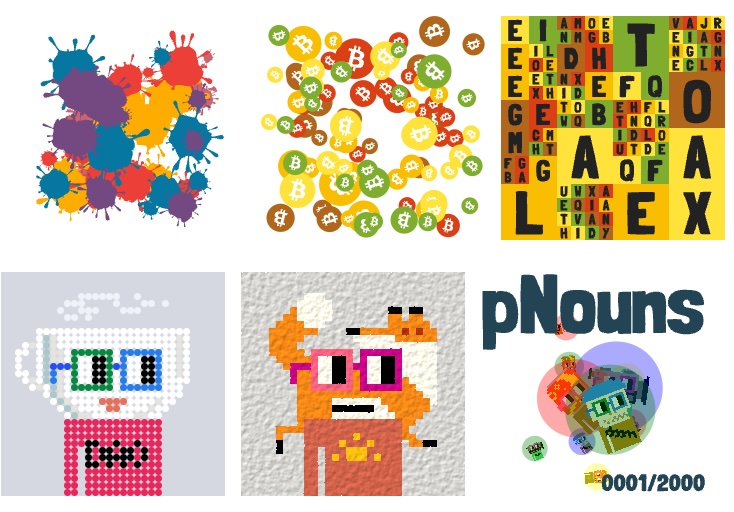
Beyond direct sales, onchain generative assets can serve as keys to broader ecosystems. Ownership of a specific generative piece can grant access to exclusive communities, future airdrops, or computational resources. This model shifts the value proposition from the image itself to the utility it unlocks. Projects like Bored Ape Yacht Club pioneered this approach, but onchain generative art takes it further by making the utility intrinsic to the generation process. For instance, a generative avatar might evolve based on onchain activity, rewarding active holders with new visual traits or access to premium features.
Data and compute monetization
The most innovative economic model leverages the generative process itself as a service. Onchain AI agents and generative algorithms can be monetized by charging for compute time or data access. This turns the artwork into a functional component of a larger decentralized network. For example, a generative model might be used to create unique visualizations for onchain data, with revenue shared between the model owner and the data providers. This model requires robust infrastructure but offers significant scalability potential.

Market dynamics and liquidity
Understanding the market dynamics of onchain generative assets is crucial for sustainable monetization. Unlike traditional art, these assets are highly liquid and can be traded 24/7 on decentralized exchanges. This liquidity attracts institutional investors but also increases volatility. Creators must balance accessibility with scarcity to maintain value. Over-saturation can dilute the perceived worth of individual pieces, while extreme scarcity may limit market participation. The key is to find a middle ground that supports both primary sales and healthy secondary markets.
Execution checklist for builders
Before committing capital or code to an onchain generative project, you need a rigorous validation framework. The space moves fast, but the infrastructure requirements remain static: security, transparency, and verifiable provenance. This checklist ensures you are building or investing in something that holds up under audit.

The core logic must live on-chain. Use tools like the Highlight File System to manage uploads and verify that the generative code is immutable and publicly accessible. If the art is just a static image pointing to an off-chain server, it fails the onchain test.

Autonomous agents require cryptographic guardrails. Review frameworks from providers like Chainlink to ensure the AI cannot execute unintended transactions or drain liquidity. Safety is not a feature; it is the foundation.

Onchain data must be tamper-proof. Ensure your project relies on distributed nodes to agree on validity before appending blocks. This prevents single-actor manipulation and provides a single source of truth for all participants.
Use live widgets to track performance. Static prices are useless for high-stakes decisions. Monitor real-time trends to gauge market sentiment and detect potential transaction opportunities early.
Onchain data manipulation and access
Onchain data is immutable by design, but accessing it requires navigating a landscape of public ledgers and specialized indexing tools. Understanding how this data is secured and retrieved is fundamental for building reliable infrastructure.
Can Onchain data be manipulated?
No, not in any practical sense. Blockchain networks rely on distributed consensus mechanisms where multiple nodes must agree on the validity of new data blocks before they are permanently appended to the ledger. This cryptographic consensus ensures that no single actor can alter historical records, providing a single source of truth for all participants.
How do I get Onchain data?
Onchain data is openly accessible through block explorers like Etherscan or Solscan. You can query this information directly to determine potential price movements or market sentiment. For infrastructure, developers often use APIs from providers like The Graph to index and query this data efficiently, monitoring how funds move on the blockchain to detect transaction opportunities.
Is Onchain data private?
Onchain data is pseudonymous, not private. While addresses do not directly reveal identities, the transaction history is fully public and traceable. Advanced on-chain analysis can link addresses to real-world entities through exchange deposits or behavioral patterns, making data privacy a significant consideration for user segmentation and compliance.
No comments yet. Be the first to share your thoughts!