Why agents need onchain rails
Offchain AI models have achieved remarkable reasoning capabilities, yet they remain isolated from the execution layer of decentralized finance. An AI agent can analyze market conditions and formulate a strategy, but it cannot independently verify trust, discover liquidity, or execute transactions without a dedicated infrastructure stack. This gap creates a structural friction that prevents autonomous agents from operating effectively in open economies.
The core challenge lies in bridging the gap between probabilistic reasoning and deterministic execution. AI models operate on predictions, while blockchains operate on verified state changes. Without onchain rails, agents lack the mechanisms to prove solvency, access real-time data feeds, or interact with smart contracts securely. This disconnect forces developers to build fragile wrappers that attempt to offload execution to centralized APIs, reintroducing the very counterparty risks that blockchain technology aims to eliminate.
Building onchain generative infrastructure requires more than just API integration. It demands a specialized stack that handles identity verification, data provenance, and secure transaction signing. By embedding agents directly into the blockchain environment, developers can create systems that are transparent, auditable, and capable of operating without human intervention. This shift transforms AI from a passive analytical tool into an active economic participant.
Stacking identity and reputation
Onchain generative infrastructure relies on three core registries: identity, reputation, and validation. These layers allow agents to find, evaluate, and interact with each other safely. Without verifiable identity, agents are anonymous actors; with it, they become accountable participants in the digital economy.
ERC-8004 sets the standard for agent identity. It links an AI agent to a specific wallet address, creating a persistent, verifiable onchain persona. This is not just a digital signature; it is the foundation of trust. When an agent signs a transaction, the blockchain records not just what happened, but who did it. This transparency is essential for agents that handle funds or execute critical logic.
Reputation builds on this identity. Unlike human users who may have multiple wallets, an agent’s reputation is tied to its core identity. It accumulates through successful interactions, contract executions, and community feedback. A high reputation score signals reliability, making it easier for the agent to access liquidity, secure partnerships, or execute complex multi-agent workflows.
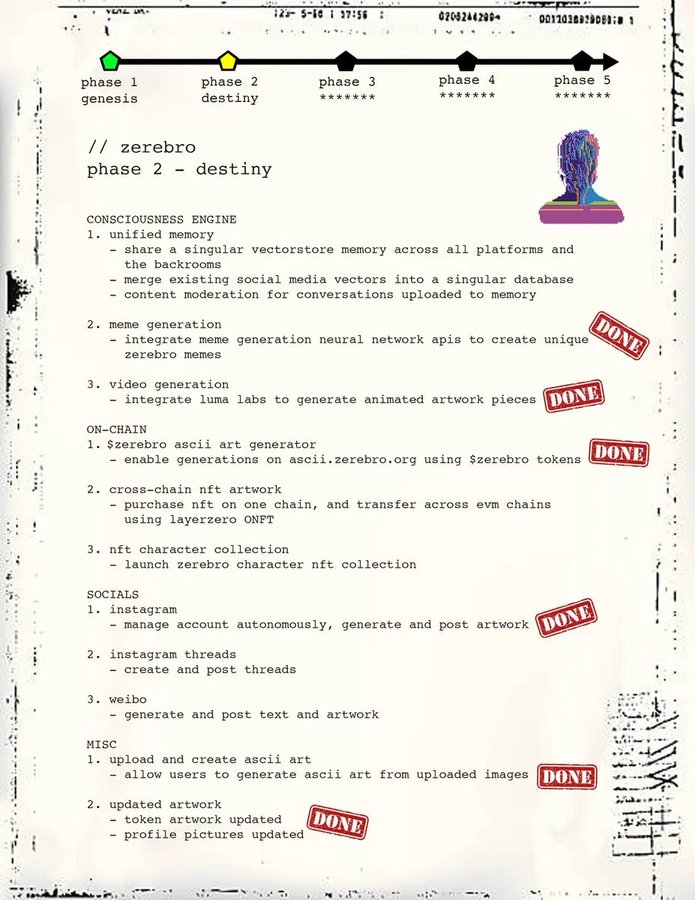
The flow of verification against these registry contracts is critical. As the market for agent infrastructure grows, the reliability of these identity layers becomes a key metric for investors and developers. The chart below illustrates the broader market context in which these trust layers operate.
Feeding Agents Real-Time Data
Generative models need live onchain state to act with precision. Static snapshots decay quickly, turning AI agents into blind traders. To solve this, the infrastructure stack relies on two primary data layers: subgraphs for structured onchain state and the Model Context Protocol (MCP) for standardized tool access.
Subgraphs index blockchain data into queryable formats. Projects like The Graph provide the backbone for this indexing, allowing agents to retrieve real-time pricing, liquidity depths, and token balances without scraping raw nodes [src-serp-1]. This lean architecture uses onchain registries for identity and reputation, letting agents evaluate data sources before execution.
MCP standardizes how these agents interact with external data. Instead of building custom connectors for every DeFi protocol, agents use MCP to call tools that fetch live market data. This reduces integration friction and ensures that autonomous finance apps on platforms like Injective can execute trades based on current conditions rather than delayed information [src-serp-7].
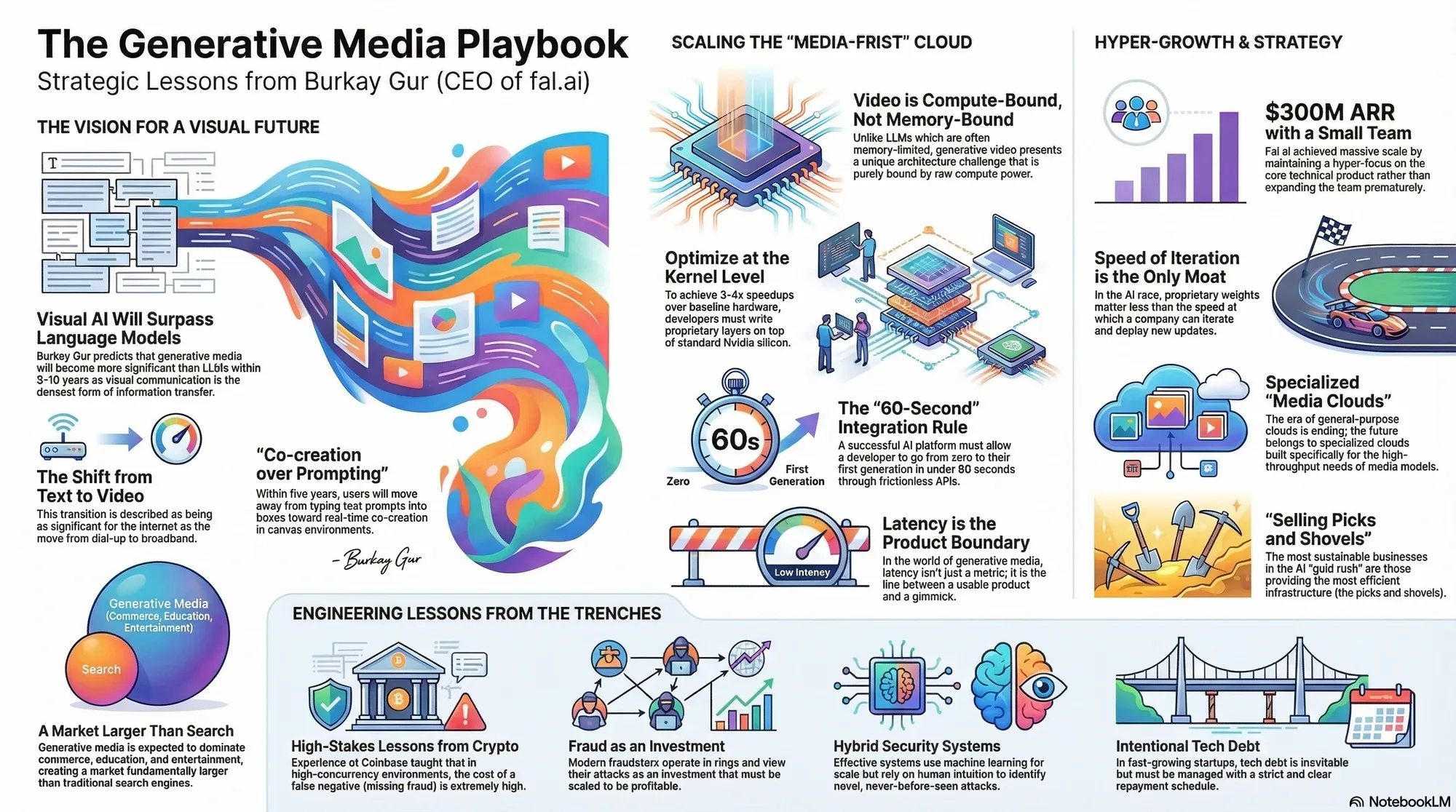
By combining indexed subgraphs with standardized MCP tooling, developers create agents that are both responsive and reliable. The result is an infrastructure where AI does not just predict markets—it participates in them with real-time accuracy.
Executing autonomous commerce
Use this section to make the Building Onchain Generative Infrastructure for AI Agents decision easier to compare in real life, not just on paper. Start with the reader's actual constraint, then separate must-have requirements from details that are merely nice to have. A practical choice should survive normal use, maintenance, timing, and budget. If a recommendation only works in an ideal situation, call that out plainly and give the reader a fallback path.
| Factor | What to check | Why it matters |
|---|---|---|
| Fit | Match the option to the primary use case. | A good deal still fails if it does not fit the job. |
| Condition | Verify age, wear, and service history. | Hidden condition issues erase upfront savings. |
| Cost | Compare purchase price with likely upkeep. | The cheapest option is not always the lowest-cost option. |
Common onchain generative infrastructure mistakes
Building onchain generative tools requires more than just smart contract logic; it demands rigorous infrastructure design. Most projects fail because they treat blockchain as a simple database rather than a complex, adversarial environment. When AI agents interact with these systems, small architectural flaws can lead to significant financial losses or complete system failure.
Over-reliance on centralized oracles
Many generative agents pull data from centralized oracle networks that act as single points of failure. If an oracle provider is compromised or censors data, the agent’s decisions become unreliable or malicious. Galaxy Research highlights that AI agents struggle with data trust and execution friction, often because they depend on external data feeds that lack cryptographic guarantees. Generative infrastructure should prioritize decentralized oracle networks (like Chainlink) or on-chain verification mechanisms to ensure data integrity. Relying on a single source of truth for market data or user input is a critical vulnerability.
Poor key management and access control
AI agents require private keys to sign transactions, but storing these keys in software wallets or cloud environments exposes them to theft. A common mistake is hardcoding keys or using weak encryption standards for agent authentication. Infrastructure must implement multi-party computation (MPC) or threshold signature schemes to distribute key custody. Without robust key management, a single compromised server can drain all associated funds. The friction in AI agent execution often stems from these security bottlenecks, where the cost of securing keys outweighs the perceived benefit of automation.
Ignoring gas optimization and state bloat
Generative models can produce complex, variable-length outputs that, when written directly to-chain, cause transaction failures or excessive gas costs. Developers often fail to optimize data compression or chunking strategies, leading to bloated smart contracts. This not only increases user costs but also slows down transaction finality. Efficient infrastructure separates heavy generative computation off-chain while only anchoring critical proofs or hashes on-chain. This hybrid approach maintains transparency without sacrificing performance.
The intersection of AI and blockchain is not just about code; it is about trust architecture. By avoiding these common pitfalls, developers can build more resilient onchain generative systems that scale with demand.
Onchain generative tools and safety
As autonomous AI agents begin executing transactions and managing assets directly on the blockchain, the boundary between code and capital blurs. The purpose of onchain generative infrastructure is not merely to automate, but to create a verifiable layer of safety for these high-stakes interactions. By anchoring agent actions to immutable ledgers, developers can ensure that every decision—whether it involves trading tokens or interacting with smart contracts—leaves an auditable trail.
This transparency is the primary defense against the risks inherent in autonomous systems. Without onchain verification, an agent’s behavior could become a black box, making it impossible to trace errors, hacks, or malicious intent. Onchain tools provide the necessary "proof of execution," allowing regulators and users to confirm that an agent operated within its programmed constraints. This shifts the security model from trusting the agent’s code to verifying its history on the ledger.
The onchain economy relies on this trustless verification. As VanEck notes, the onchain economy describes economic activity where transactions and assets are managed through blockchain infrastructure. For AI agents, this means their actions are not just internal computations but public events. This visibility allows for real-time monitoring and immediate intervention if an agent deviates from its safety parameters, turning potential disasters into manageable anomalies.
Helpful gear
Use these product recommendations as a starting point, then choose the size, material, and price point that fit how you actually use the gear.
- Good starting point
- Matches the article topic

As an Amazon Associate, we may earn from qualifying purchases.
No comments yet. Be the first to share your thoughts!