The onchain generative infrastructure gap
The promise of AI agents living on-chain sounds simple: write a smart contract, connect a model, and let the agent execute. In practice, the current stack is held together by duct tape. AI agents can broadcast transactions, but they struggle with the foundational tasks of discovery, trust, data validation, and reliable execution. This isn't a software bug; it's a structural friction that prevents meaningful value accrual.
Galaxy Research highlights that while execution is possible, the surrounding infrastructure for reliable onchain interaction is missing. Agents cannot easily verify if the data they are acting on is trustworthy, nor can they seamlessly discover which protocols or liquidity pools are safe to interact with. Without this layer, agents are blind actors throwing darts in the dark.
This gap creates a value leak. As noted by industry observers, if an agent spends tokens to perform work, the value it generates should exceed the cost of those tokens. Yet, without robust infrastructure to ensure that work is actually useful and executed correctly, the agent burns capital without creating corresponding value. The result is a cycle of expensive, unreliable experiments rather than sustainable, onchain generative workflows.
Building the right stack means solving for these frictions first. It requires infrastructure that doesn't just execute code, but validates context, verifies data provenance, and ensures that the agent's actions align with real-world or onchain utility. Until then, onchain AI remains more of a proof-of-concept than a functional economic layer.
Identity and Reputation Registries
Agents cannot operate in a vacuum. To function within the onchain generative infrastructure stack, they need a verifiable identity and a track record that other systems can trust. This is where onchain registries come in, acting as the foundational layer for agent discovery and interaction.
The standard approach relies on frameworks like ERC-8004, which provide a universal way to store and retrieve agent metadata. Think of this as the agent's digital passport. It doesn't just hold a name or a wallet address; it contains structured data about the agent's capabilities, ownership, and operational history. By standardizing this information, the infrastructure ensures that any system can parse an agent's credentials without needing a custom integration for every new model or tool.
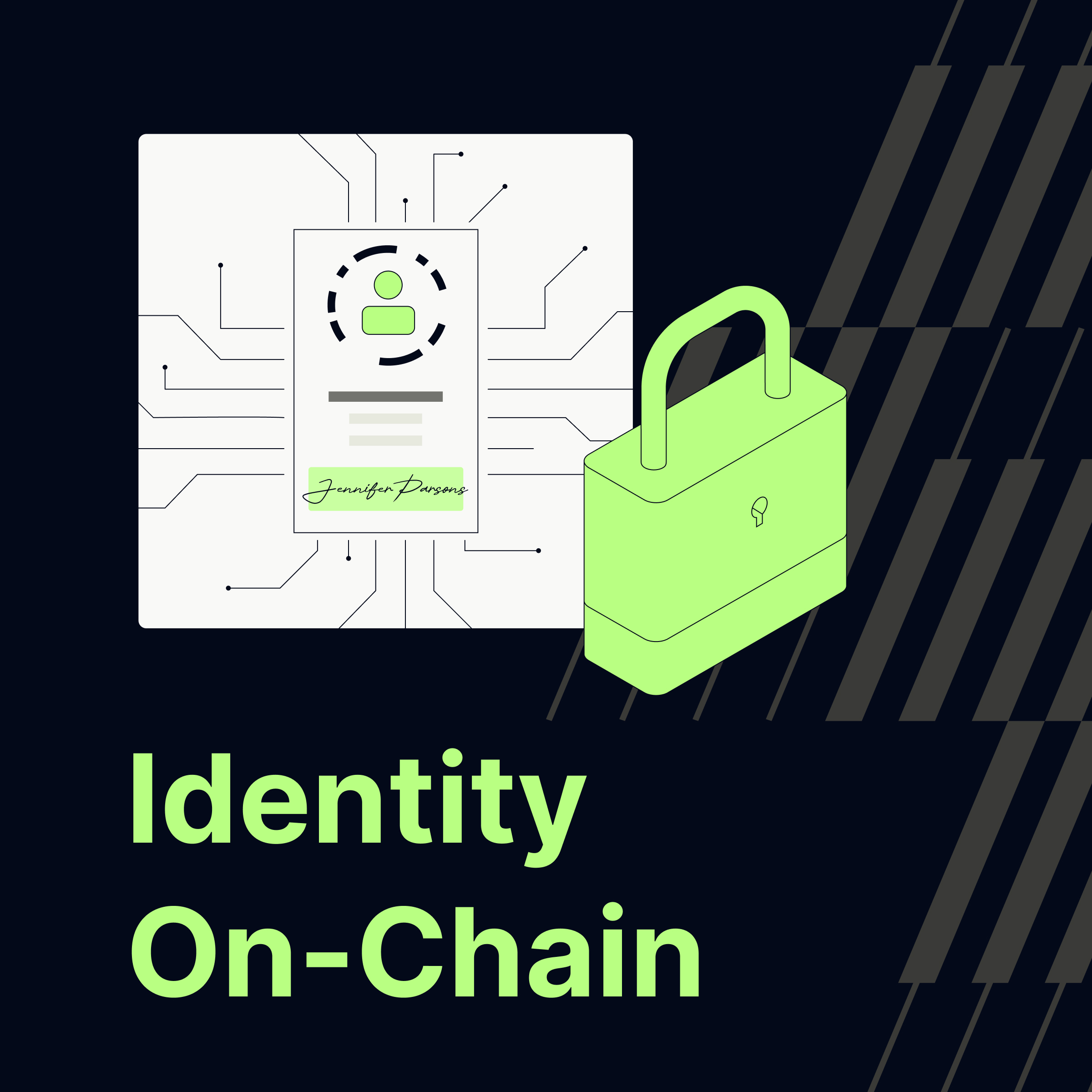
Reputation is equally critical. An identity is only as useful as the trust attached to it. Registries accumulate onchain signals—such as successful task completions, security audits, or community endorsements—to build a reputation score. This allows users and other agents to evaluate reliability before committing resources. As noted by The Graph, this lean registry structure enables agents to find, evaluate, and interact with each other in a decentralized manner, creating a self-sustaining ecosystem of automated labor.
Data access and environmental awareness
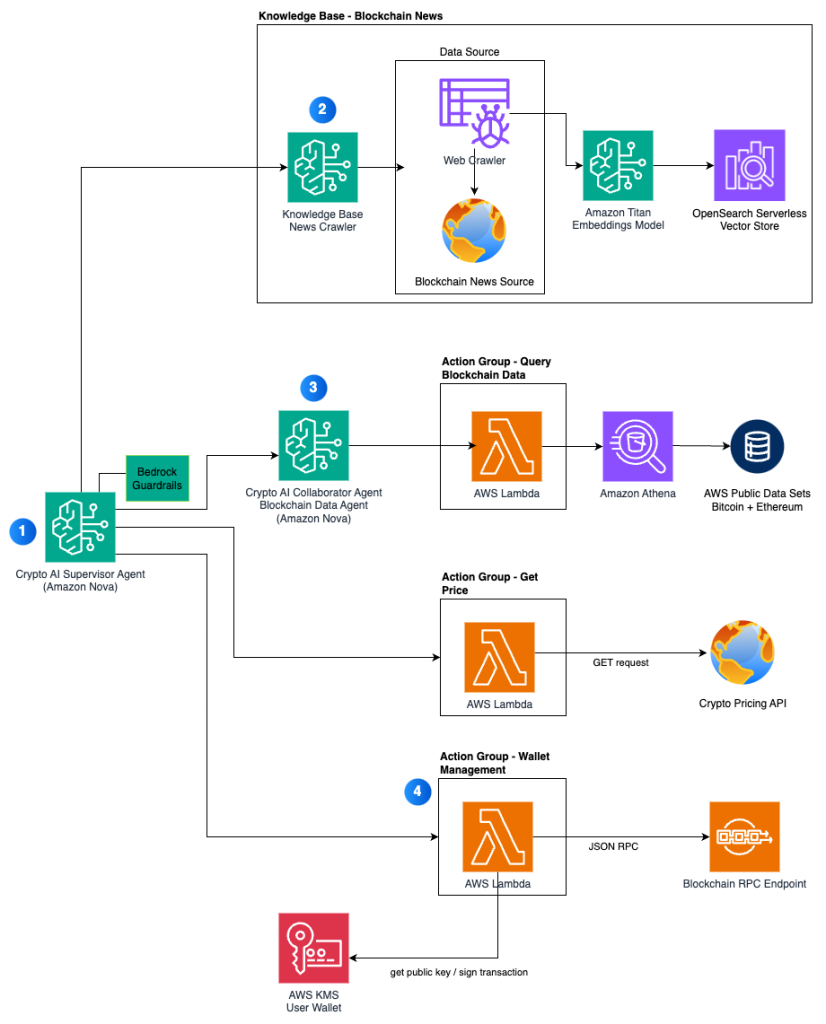
An onchain generative infrastructure stack is only as sharp as its situational awareness. Agents need to read the blockchain ledger for state changes and pull off-chain signals for context. Without this dual feed, an agent is guessing rather than acting.
Reading the chain
Onchain state is the ground truth. Agents query smart contracts for balances, positions, and governance status. This data is deterministic and immutable, forming the baseline for any autonomous action. The Graph and similar indexing protocols make this data queryable without syncing entire nodes, keeping the stack lean.
Bringing in off-chain signals
Blockchain data alone is lagging. To react to market shifts or external events, agents ingest off-chain data via oracles. This includes price feeds, weather data, or news sentiment. The agent correlates these external triggers with onchain positions to adjust strategies in real time.
Making informed decisions
The integration of these two data streams allows for nuanced decision-making. An agent might see a price drop on-chain but verify it against an off-chain oracle to distinguish between a flash crash and a trend reversal. This environmental awareness prevents costly errors in autonomous finance.

Autonomous commerce and execution
The execution layer is where onchain generative infrastructure stops simulating and starts spending. This is the operational core where agents move funds, settle trades, and interact with smart contracts without human hand-holding. It transforms abstract AI logic into tangible onchain actions, bridging the gap between decision-making and financial settlement.
To make this work, the infrastructure relies on a lean stack of onchain registries. According to The Graph, these registries for identity, reputation, and validation allow agents to safely find, evaluate, and interact with other protocols. This trust layer is essential; an agent cannot autonomously execute commerce if it cannot verify the legitimacy of the counterparty or the security of the target contract.
Before an agent can transact, it must prove who it is. Onchain generative infrastructure uses decentralized identifiers (DIDs) to anchor agent identity to a blockchain address. Reputation scores, derived from past successful transactions, act as a credit rating, allowing the agent to access liquidity pools or execute high-value trades that would otherwise be restricted.
Once identified, the agent connects to decentralized finance (DeFi) protocols. Platforms like Injective provide the necessary rails for AI agents to build autonomous finance apps. These rails offer the liquidity and order book structures required for agents to execute complex strategies, such as arbitrage or portfolio rebalancing, directly on-chain.
The final step is the execution itself. The agent signs a transaction using its private key and broadcasts it to the network. Because these interactions are onchain, every action is immutable and transparent. This allows for real-time auditing and verification, ensuring that the agent’s behavior matches its programmed intent and reputation score.
Strategic analysis for 2026
Building the onchain generative infrastructure stack requires matching specific capabilities to the right layer of the blockchain. As Galaxy Research notes, AI agents currently face friction in discovery, trust, and data execution, which means infrastructure must bridge the gap between off-chain intelligence and on-chain settlement.
The table below compares the core trade-offs between the three primary infrastructure approaches. Each model serves a different part of the stack, from raw data availability to the final execution layer.
| Infrastructure Layer | Cost Structure | Latency | Data Coverage |
|---|---|---|---|
| Layer 1 Settlement | High (Gas fees) | High | Full blockchain history |
| Indexer / API | Low (Subscription) | Low | Structured subsets |
| ZK Coprocessor | Medium | Medium | Computationally verified |
For investors and builders, the decision comes down to whether you need raw trust or efficient access. Layer 1 settlement provides the highest level of assurance but at a significant cost and speed penalty. Indexers offer speed and low cost but rely on centralized or semi-centralized trust assumptions. ZK coprocessors sit in the middle, offering verifiable computation without the full overhead of mainnet execution.
The onchain economy is evolving from simple transactions to complex, agent-driven interactions. Infrastructure that can reduce friction while maintaining security will capture the most value in 2026.
Common questions on onchain agents
Building the onchain generative infrastructure stack involves navigating technical, economic, and semantic nuances. Here are the most frequent questions regarding safety, profitability, and terminology.
Helpful gear
Use these product recommendations as a starting point, then choose the size, material, and price point that fit how you actually use the gear.
- Good starting point
- Matches the article topic
As an Amazon Associate, we may earn from qualifying purchases.
No comments yet. Be the first to share your thoughts!