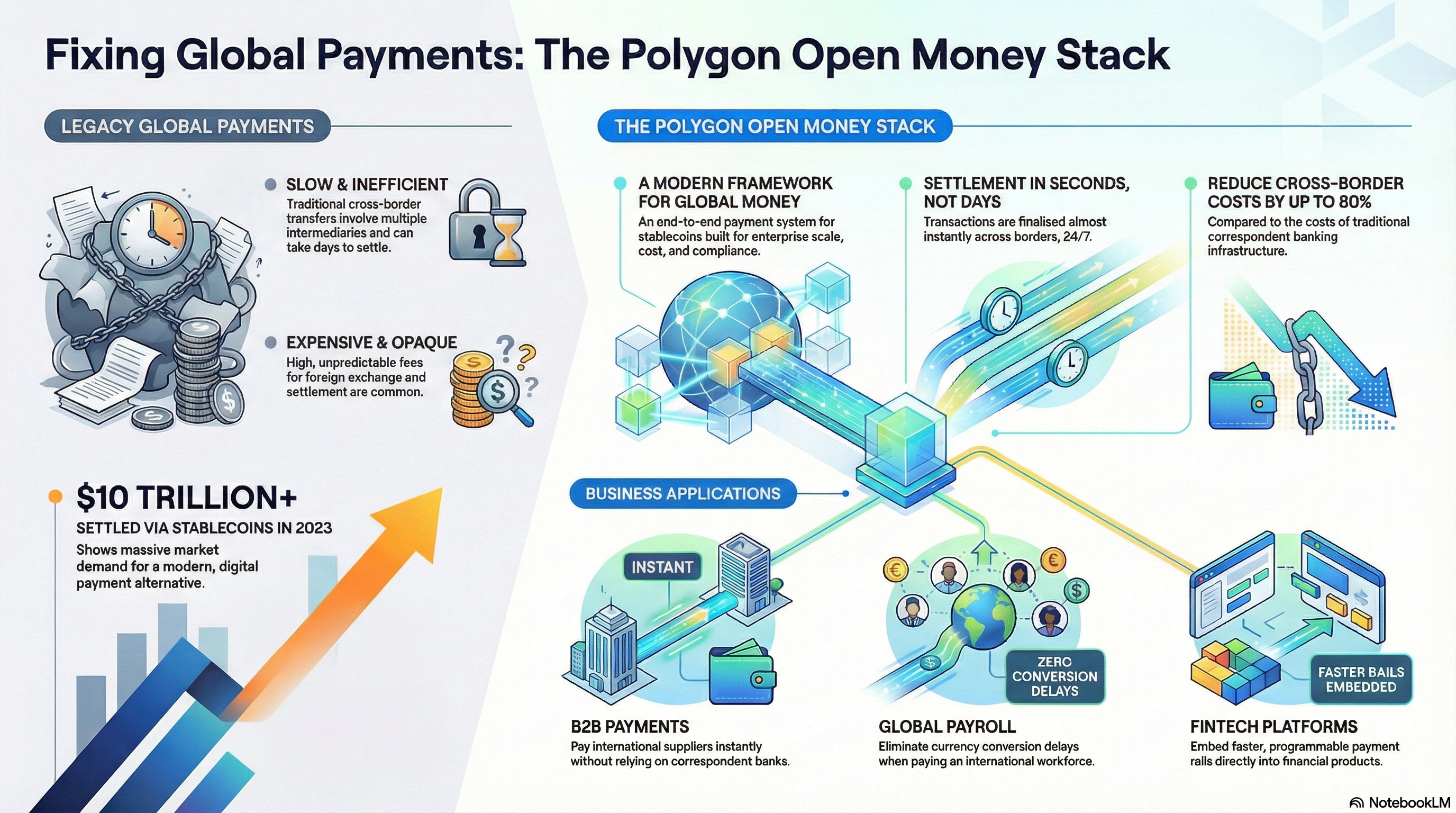
The onchain generative infrastructure stack
Onchain generative infrastructure is the underlying layer that allows digital assets and artificial intelligence to operate directly on the blockchain. It moves beyond simple tokenization to create environments where complex logic and autonomous agents can execute transactions with precision. This stack transforms how financial infrastructure functions, shifting from static records to dynamic, programmable economies.
The foundation consists of tokenized assets. These are real-world or digital assets represented on-chain, serving as the raw material for generative processes. Unlike traditional ledgers, these tokens carry immutable history and can be composited with other protocols. This layer ensures that value is portable, verifiable, and ready for automated interaction without intermediaries.
Above the asset layer sits the execution environment. This is where onchain AI agents operate, processing data and making decisions based on predefined rules. These agents can manage portfolios, execute trades, or generate content, all while leaving a transparent, auditable trail. The infrastructure ensures that risk is modeled precisely, allowing institutions to isolate market exposure and enforce compliance through code rather than manual oversight.
At the top of the stack are the governance and data oracles. They feed external information into the system, ensuring that onchain decisions reflect real-world conditions. This transparency is critical for institutional adoption, as it allows for rigorous risk modeling. As described by PwC, this shift enables a more precise approach to managing financial risk, defining it by collateral and market isolation rather than broad categories. The result is a robust framework for the onchain economy, where transactions, data, and assets are managed with unprecedented clarity.
Agentic execution and autonomous finance
Onchain generative infrastructure provides the necessary rails for AI agents to operate autonomously in financial markets. By embedding identity directly into the blockchain, agents can securely interact with smart contracts without relying on centralized intermediaries. This architectural shift moves beyond simple data access, allowing agents to hold keys, manage assets, and execute trades as independent economic actors.
The core of this system lies in deterministic enforcement. Smart contracts act as immutable rulesets, ensuring that every agent action is auditable and compliant with predefined parameters. Access control is further refined through session keys, which limit an agent’s permissions to specific tasks or timeframes, reducing exposure to broader wallet vulnerabilities. This structure allows for high-frequency, low-latency execution while maintaining institutional-grade security standards.
Platforms like Injective are building specialized infrastructure to support these AI-native operations, combining DeFi rails with robust execution engines. The result is a market stack where agents can navigate liquidity, manage risk, and rebalance portfolios in real time. As onchain data remains public and permanent, these autonomous systems can leverage transparent market signals to make informed decisions, creating a feedback loop between onchain activity and agent intelligence.
This environment transforms risk modeling from a broad categorization exercise into a precise, collateral-specific operation. Risk is no longer just a spectrum; it is isolated by market and enforced through infrastructure, allowing for granular allocation strategies that were previously impossible in traditional finance.
Deterministic risk enforcement
Traditional offchain risk modeling often relies on aggregated data points and periodic audits, leaving gaps where risk can hide or be misinterpreted. Onchain generative infrastructure changes this by enforcing risk parameters directly through smart contracts. Instead of treating risk as a broad, static category, the infrastructure allows institutions to define risk with granular precision. As noted by the Ethereum Alliance, "risk is a spectrum" that can be isolated by market and enforced by code, reducing the reliance on trust in third-party custodians.
This shift from discretionary to deterministic enforcement is critical for institutional allocation. When risk logic is embedded in the protocol, it becomes immutable and transparent. Auditable data flows in real-time, allowing risk managers to see exactly how collateral is being used and where exposure lies. This level of visibility was previously impossible in traditional finance without expensive, manual reconciliation processes.
The contrast between old and new methods is stark. Offchain systems often suffer from data silos and latency, making it difficult to react to market shifts quickly. Onchain systems, by contrast, provide a single source of truth that is public and permanent. No single party can secretly alter the data after it is confirmed, which eliminates a significant class of operational risk.
| Feature | Traditional Offchain Modeling | Onchain Deterministic Enforcement |
|---|---|---|
| Data Source | Aggregated, periodic reports | Real-time, public blockchain data |
| Risk Definition | Broad, categorical buckets | Granular, collateral-specific |
| Enforcement | Manual, post-trade audits | Automated, pre-trade smart contracts |
| Transparency | Limited to auditors/regulators | Public, verifiable by anyone |
By moving risk enforcement onchain, institutions can allocate capital with greater confidence. The infrastructure ensures that the rules of engagement are applied consistently, regardless of market volatility or human error. This precision is not just a technical upgrade; it is a fundamental shift in how financial risk is understood and managed.
Data integrity and manipulation risks
Onchain data is the information recorded directly on a blockchain, such as transactions, token transfers, smart contract activity, and wallet balances. It is public and permanent, so anyone can read it and no single party can secretly change it after it is confirmed 1.
This permanence cuts both ways. While it prevents retroactive editing of history, it also means that if an AI agent’s input data is poisoned or manipulated before it hits the chain, that corruption becomes part of the permanent record. Onchain generative infrastructure relies on this data to make decisions, so the integrity of the input is just as critical as the immutability of the output.
The risk isn't just about malicious actors; it's about the reliability of the data pipeline. Onchain AI agent identity systems are designed to ensure that autonomous systems securely interact with smart contracts 2. However, if the data feeding these agents is derived from off-chain sources that are susceptible to manipulation, the entire onchain generative infrastructure becomes vulnerable to "garbage in, garbage out" scenarios. The blockchain guarantees the data hasn't changed since it was written, but it doesn't guarantee the data was accurate when it was written.
No comments yet. Be the first to share your thoughts!