Onchain generative infrastructure defined
Onchain generative infrastructure is the convergence of blockchain programmability and artificial intelligence. It is not merely running AI models on a server that happens to connect to a wallet. Instead, it represents a fundamental shift in how economic value and data are managed, where transactions, assets, and intelligence are processed directly on the ledger.
This infrastructure layer enables AI agents to transact, verify, and settle value autonomously. Unlike cloud-based AI, which operates within opaque, centralized silos, onchain generative infrastructure provides a transparent, immutable environment. As noted by industry analysts, this precision allows risk to be defined by specific collateral and isolated by market conditions, enforced directly through the protocol rather than third-party intermediaries [EntEth Alliance].
The distinction is critical for high-stakes finance. In this model, the "intelligence" is not just generating text or images; it is executing complex financial logic that is publicly verifiable. This creates a new paradigm where digital assets are created, owned, and exchanged with a level of auditability that traditional cloud AI cannot match.
To understand the scale of this convergence, it helps to look at the underlying asset classes driving this evolution. The market is currently pricing in the potential for AI-integrated blockchain protocols, as seen in the performance of major crypto assets.
The core layers of the onchain stack
For an AI agent to operate onchain, it must navigate a technical architecture that differs fundamentally from the offchain web. The stack is not a monolith; it is a series of specialized layers for compute, data, and execution. When these layers align, agents can execute complex financial logic autonomously. When they do not, agents hit significant friction points in discovery, trust, and data integrity.
The data layer provides the raw material. Onchain data is public and permanent, recorded directly on the blockchain. Unlike traditional databases, it cannot be secretly altered after confirmation. This transparency allows agents to verify collateral and market conditions with precision. However, the volume of data requires specialized indexing to be usable in real-time decision-making.
The compute layer is where the AI actually processes information. This requires significant offchain processing power to handle large language models and complex algorithms, but the results must be verifiable onchain. This creates a bridge between traditional cloud infrastructure and blockchain consensus. The gap between offchain computation and onchain verification is where most current bottlenecks occur.
The execution layer is the final destination. Once an agent has processed data and computed a strategy, it must interact with smart contracts. All assets onchain are programmable by default, which means execution is automated but immutable. A mistake in the logic cannot be undone, making the reliability of the underlying infrastructure critical for high-stakes operations.
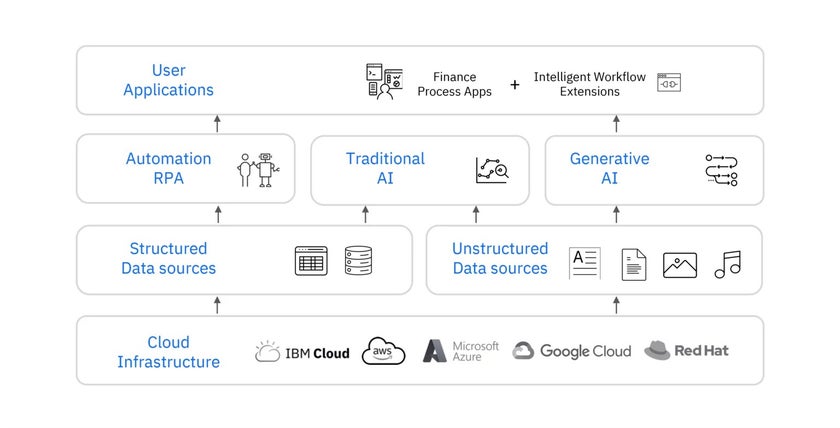
The interaction between these layers determines the viability of onchain generative infrastructure. As the market matures, the focus shifts from isolated experiments to integrated stacks that minimize latency and maximize trust. Understanding these layers is essential for anyone building or investing in the next wave of autonomous financial agents.
Top onchain generative tools for 2026
The infrastructure layer for onchain generative systems is shifting from experimental prototypes to institutional-grade rails. As AI momentum spills into onchain agentic networks, the tools that matter most are those that solve for verifiable compute, decentralized data, and agent payment. We are seeing a consolidation around projects that can prove their work onchain, rather than those that merely promise it.
The stack is no longer just about running models; it is about proving the model ran correctly and was paid for in real-time. This shift has created a clear hierarchy among the top onchain generative infrastructure projects, separating the speculative from the operational.
The Infrastructure Comparison
To understand where capital and development effort are flowing, it helps to compare the leading contenders on their core utility. The following breakdown highlights how different projects approach the bottleneck of decentralized AI.
| Project | Primary Focus | Scalability Model | Token Utility |
|---|---|---|---|
| Render Network | GPU Compute | Network of nodes | Pay for GPU power |
| Bittensor | Decentralized ML | Subnet architecture | Incentivize miners |
| Akash Network | Cloud Computing | Marketplace auction | Pay for compute |
| Ocean Protocol | Data Marketplace | Data tokens | Access and trade data |
Hardware considerations for builders
If you are building local nodes or running inference pipelines for onchain generative tasks, your local hardware setup matters. While you can rent compute, having a baseline local environment is essential for testing and development. For those looking to set up a secure local development environment, the following tools are standard in the industry.


As an Amazon Associate, we may earn from qualifying purchases.
Market Context
The performance of these infrastructure projects is often tied to broader AI and crypto market cycles. Understanding the liquidity and trading volume of the underlying tokens can provide insight into market sentiment. For instance, the price action of major AI and compute tokens often serves as a leading indicator for development activity in the space.
Navigating onchain AI risks
Building onchain generative infrastructure requires treating risk as a spectrum rather than a binary switch. The promise of programmable assets is real, but it introduces friction points that traditional finance has spent decades mitigating. AI agents executing onchain face discovery, trust, and data execution hurdles that can derail even the most sophisticated models.
The primary vulnerability lies in data integrity. While onchain data is public and permanent, meaning no single party can secretly alter it after confirmation, the inputs feeding your generative models are often off-chain. If an agent pulls from a manipulated oracle or a compromised data source, the smart contract will execute that bad data with immutable finality. This creates a "garbage in, gospel out" scenario where the infrastructure's precision amplifies the error.
Regulatory uncertainty adds another layer of complexity. Institutional allocation depends on precise risk modeling, and current frameworks struggle to classify autonomous AI agents. Are they tools or entities? The answer dictates compliance requirements for everything from KYC to liability. Until regulations catch up, developers must build with the assumption that any autonomous action could be scrutinized under existing securities or financial laws.
Market volatility in this sector is extreme. The price action of major AI tokens reflects both genuine technological adoption and speculative frenzy. Understanding the underlying infrastructure capabilities is essential for distinguishing between long-term value and short-term noise.
No comments yet. Be the first to share your thoughts!