Defining onchain generative infrastructure
Onchain generative infrastructure represents the convergence of generative AI and blockchain technology. It is not merely about creating AI art or deploying chatbots on a ledger. Instead, it refers to the foundational layer that allows decentralized networks to process, verify, and execute AI-driven tasks autonomously. This infrastructure layer is critical for the current market cycle because it bridges the gap between centralized AI capabilities and decentralized trust mechanisms.
The onchain economy is evolving into a new era of the internet where value and intelligence are intertwined. Generative AI unlocks new possibilities within this ecosystem by enabling dynamic content creation, automated smart contract interactions, and personalized user experiences without relying on a single point of failure. For developers and investors, understanding this intersection is essential. It shifts the focus from simple token speculation to building robust, utility-driven applications that leverage both AI's creative power and blockchain's transparency.
This infrastructure supports a wide range of applications, from decentralized autonomous organizations (DAOs) that use AI for governance to marketplaces that verify the provenance of AI-generated assets. By embedding AI directly into the blockchain layer, we can reduce latency, lower costs, and enhance the security of digital interactions. As the market matures, the companies and protocols that successfully integrate these technologies will likely define the next wave of innovation in the digital economy.
How to build onchain generative art
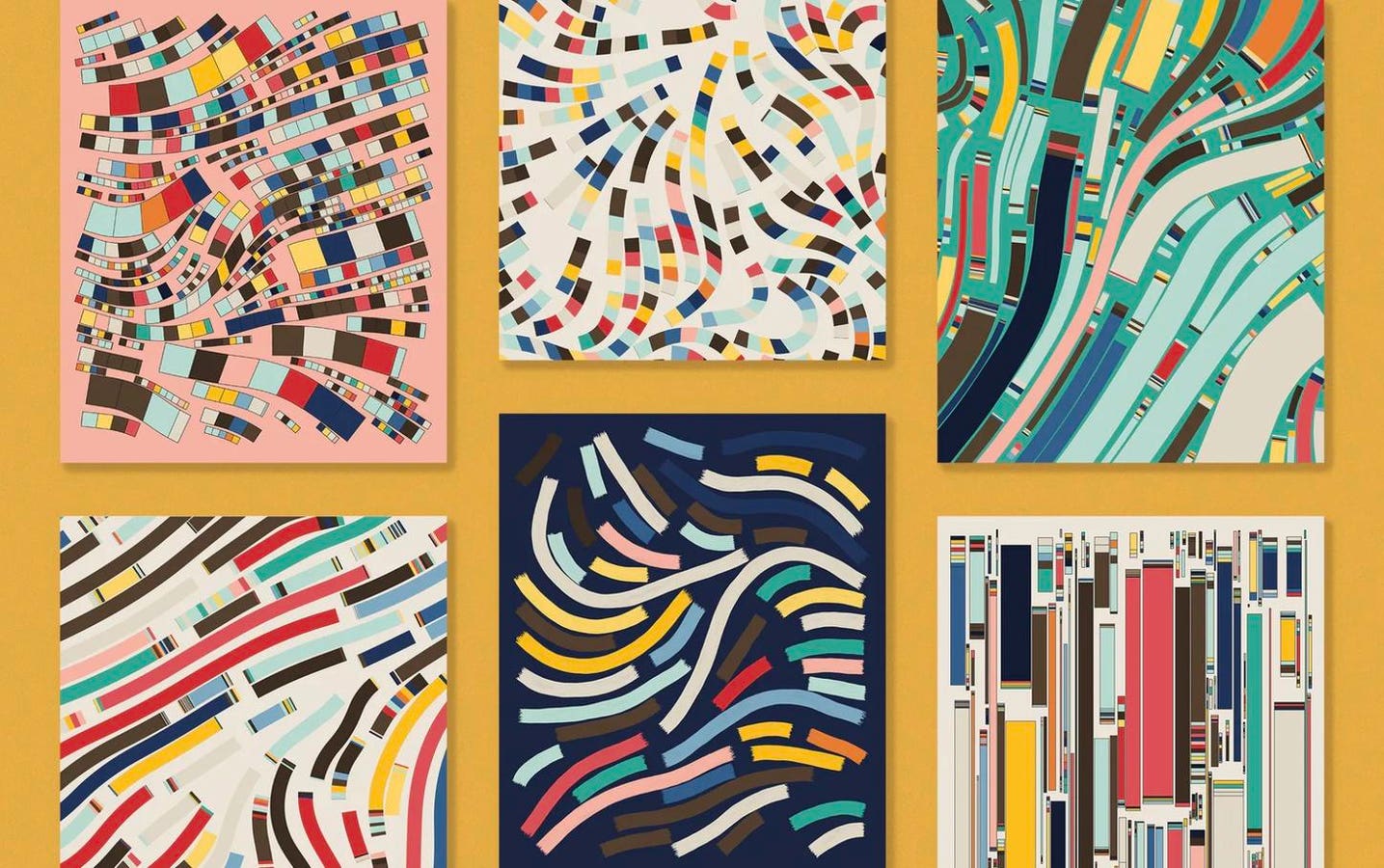
Building onchain generative art means embedding the code that generates the image directly into the smart contract. Unlike standard NFTs that point to external IPFS links, onchain art lives entirely on the blockchain. This approach guarantees immutability and ensures the art can never be taken down or corrupted, but it requires careful attention to gas efficiency.
The most practical format for onchain art is SVG. Because SVGs are text-based vectors, they are significantly smaller than raster images like PNGs. This size difference matters because you are paying gas fees for every byte of data written to the blockchain. A well-optimized SVG can keep deployment costs manageable while still allowing for complex, randomized visual outputs.
The workflow involves writing a deterministic algorithm that outputs an SVG string, deploying a smart contract that stores this logic, and verifying that the onchain output matches your local preview. Below is the step-by-step process to get your first piece onchain.
Start by writing the logic in a language that compiles to EVM bytecode, such as Solidity. You can use JavaScript or Python for prototyping, but the final code must run on-chain. Focus on creating a deterministic function: given the same input (usually the token ID), it must always produce the exact same SVG string. Keep the logic simple to avoid hitting block gas limits.
Convert your visual concepts into SVG paths. Avoid complex filters, gradients, or external assets. Use simple geometric shapes, lines, and basic colors. The goal is to minimize the character count of the generated string. Every byte saved reduces the gas cost of deployment. Test your algorithm locally to ensure the SVG renders correctly in a browser before moving to the blockchain.
Write a Solidity contract that includes your generative function. Use a standard ERC-721 or ERC-1155 interface. When a user mints a token, the contract should call your generative function and return the SVG string as metadata. Ensure the contract is verified on a block explorer so users can audit the code. This transparency is a key selling point of onchain art.
Before launching, mint a few test tokens on a testnet. Check that the metadata URIs return the correct SVG strings. Verify that the images render correctly in wallets and marketplaces. Some marketplaces may have specific requirements for onchain metadata, so check their documentation. This step prevents costly errors after mainnet deployment.



As an Amazon Associate, we may earn from qualifying purchases.
Building onchain art is a technical challenge that rewards precision. By focusing on SVG optimization and deterministic code, you can create immutable digital assets that truly live on the blockchain. The process requires patience, but the result is a piece of art that is permanently preserved and fully transparent.
Launching onchain generative projects
Deploying generative art onchain requires more than just smart contracts; it demands a robust infrastructure for storing and rendering code. The tooling ecosystem has evolved to handle the complexity of onchain SVGs and interactive assets, allowing creators to focus on the logic rather than the plumbing.
Highlight File System stands out as a primary solution for this workflow. It provides a CLI tool that simplifies uploading generative art projects and managing the associated onchain file systems. By abstracting the storage layer, developers can ensure their art remains accessible and verifiable without managing complex IPFS pinning services manually.
For teams comparing options, the landscape includes specialized renderers and storage protocols. The table below outlines key differences in ease of use, gas efficiency, and rendering capabilities.
| Tool | Ease of Use | Gas Cost | Rendering |
|---|---|---|---|
| Highlight File System | Low (CLI-based) | Medium | Onchain SVG |
| Art Blocks Engine | Medium (SDK) | High | Complex JS |
| Standard ERC-721 | High | Low | None (Offchain) |
When selecting a tool, consider whether your project requires real-time onchain computation or if static SVGs suffice. The former offers greater interactivity but incurs higher gas costs, while the latter is more cost-effective for large collections.
Autonomous AI agents on chain
The latest evolution in crypto infrastructure moves beyond simple automation. We are now seeing AI agents that operate autonomously on-chain, making decisions and executing transactions without centralized oversight. These agents function as independent entities, capable of minting assets, interacting with users, and managing funds based on predefined logic or learned behaviors.
This shift transforms the blockchain from a static ledger into an active environment where intelligent agents can mint NFTs or execute trades in response to real-time data. For example, recent tutorials demonstrate how to build on-chain AI agents that interact with users on social platforms like X and automatically mint NFTs when specific conditions are met. This capability blurs the line between software code and autonomous digital actors.
For developers, this means building robust, secure smart contracts that can handle complex state changes. For investors, it opens up new possibilities for programmable assets and dynamic market interactions. The key is understanding the underlying architecture and ensuring that the agent's actions align with the intended economic model.
While the potential is significant, the space is still nascent. Projects like those on Avalanche are providing early blueprints for these interactions, but widespread adoption depends on solving critical issues around security, scalability, and regulatory compliance. As the technology matures, we can expect to see more sophisticated agents that can navigate complex on-chain ecosystems with minimal human intervention.
Market viability and profitability
Building onchain generative infrastructure isn't just a technical exercise; it's a financial one. The market is no longer a blank check. Profitability hinges on whether your infrastructure can serve specific, high-value segments rather than chasing broad, saturated crowds. As one industry guide notes, "on-chain user segmentation" is the key to translating raw data into actionable business insights, allowing you to target users who actually pay for utility rather than speculation.
The financial reality is bifurcated. On one side, there is the infrastructure layer—providing compute, model hosting, and data pipelines. On the other, the application layer—generative NFTs, AI agents, and content platforms. Success in the latter requires careful timing and an understanding of floor prices and demand cycles, as noted in market analyses of AI-generated art. The former requires consistent uptime and low-latency access to ensure your clients' applications remain viable.
To gauge market sentiment, it helps to look at the tokens that power these ecosystems. While prices fluctuate, the underlying demand for AI compute and onchain data remains a core driver. The following chart illustrates the recent performance of a major AI-focused asset, reflecting broader market trends in this sector.
Common questions on onchain generative art
The intersection of generative AI and onchain infrastructure is evolving fast, but the financial realities remain grounded in market mechanics. Whether you are a developer building the tools or a creator minting the output, understanding the current landscape is essential for realistic expectations.
No comments yet. Be the first to share your thoughts!