The onchain generative infrastructure stack
Onchain generative infrastructure is not a single product; it is a three-layer stack where data, compute, and execution converge. This architecture moves beyond vague concepts to concrete structural components, defining how AI agents interact with immutable ledgers.
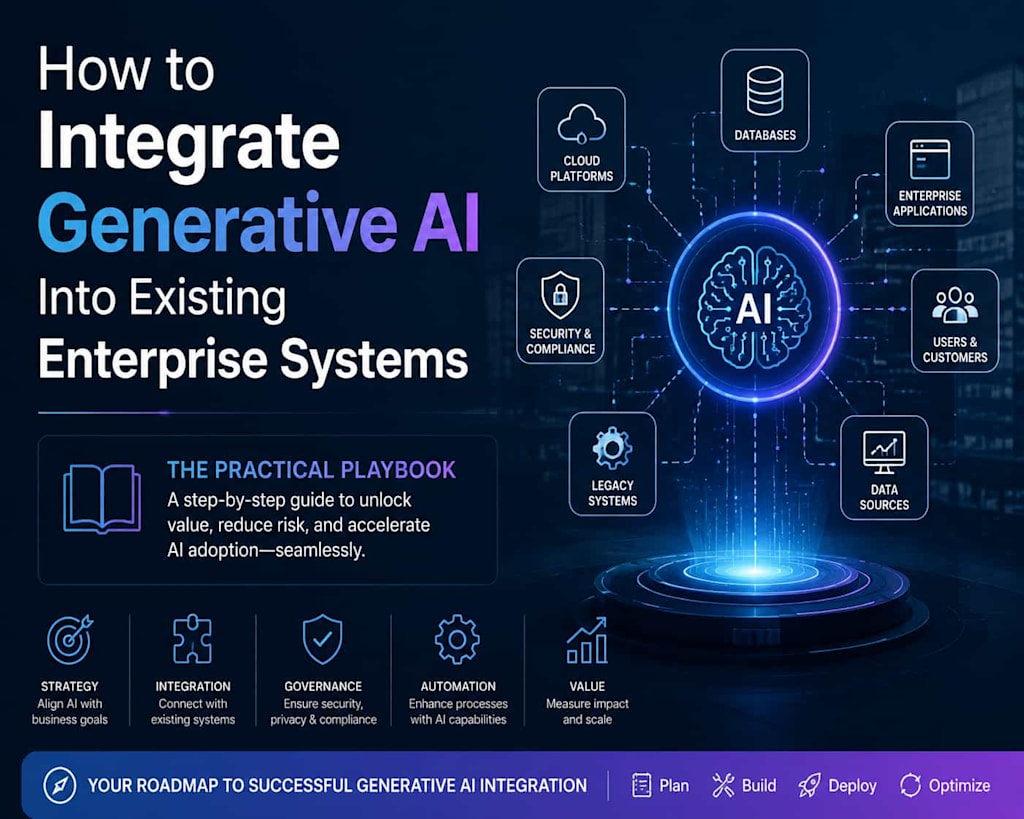
The foundation is the data layer. Unlike traditional cloud storage, onchain data is verifiable and immutable. It provides a single source of truth for all participants, ensuring that no single actor can manipulate the history of transactions or model inputs. This integrity is critical for high-stakes finance, where auditability is non-negotiable.
Above data sits the compute layer. This is where generative models process information. Instead of relying on opaque black boxes, this layer leverages decentralized nodes to perform calculations. The result is a verifiable computation that can be proven onchain, reducing reliance on trusted third parties for model inference.
The top layer is execution. Here, smart contracts act on the results of the computation. Whether minting an NFT, transferring assets, or triggering a complex financial derivative, the execution is automated and transparent. This convergence of data, compute, and execution creates a robust environment for agentic AI to operate with precision and accountability.
Data: The verifiable foundation
Generative models fail when they hallucinate, and they hallucinate when they lack reliable grounding. The current solution relies on tokenized data markets that provide immutable, verifiable training sources. By anchoring models to onchain data integrity, we eliminate the ambiguity of unverified web scraping.
Onchain data offers a single source of truth. Distributed nodes must agree on the validity of new data blocks before they are permanently appended to the ledger. This consensus mechanism ensures that no single actor can manipulate the history of the data. For agentic workflows, this immutability is non-negotiable; the model must know its inputs are authentic.
Tokenized data markets allow models to train on these verified sources. Instead of ingesting noisy, unstructured internet data, systems access structured, onchain records. This shift from probabilistic guessing to deterministic verification reduces error rates significantly.
| Feature | Traditional Data | Onchain Data |
|---|---|---|
| Verifiability | Low | High |
| Manipulation Resistance | Low | High |
| Source Traceability | Opaque | Transparent |
Decentralized compute networks
The shift from centralized cloud AI to decentralized compute is no longer theoretical. Networks like Corelium are building infrastructure that combines decentralized computing, data tokenization, and AI model staking into a single chain. This architecture allows high-volume AI workloads to run on distributed nodes rather than relying on a single hyperscaler.
This transition introduces verifiable processing. Instead of trusting a black-box API, developers can audit where models run and how data is processed. Tokenized data markets further support this by allowing models to train on sources that are transparent and immutable. This reduces the risk of data poisoning and ensures that the training pipeline remains clean.
Model staking adds another layer of security. By locking up tokens, providers signal commitment to performance and uptime. This aligns incentives across the network, ensuring that computational resources are allocated efficiently to the most critical workloads. The result is a more resilient infrastructure for agentic AI applications that require high availability and data integrity.
Execution: Agentic settlement and contracts
The promise of onchain AI isn't just about generating content; it's about autonomous action. For an AI agent to operate effectively in a high-stakes financial environment, it must bridge the gap between offchain intelligence and onchain execution. This shift introduces structural friction that doesn't exist in traditional web2 workflows. The core challenges revolve around three pillars: discovery, trust, and the underlying smart contract infrastructure.
The Friction of Discovery and Trust
AI agents face a significant hurdle in finding reliable counterparties and verifiable data sources onchain. Unlike centralized platforms with curated marketplaces, decentralized ledgers are open and often noisy. An agent must be able to authenticate the identity of a contract or another agent without relying on a central authority. This requires robust cryptographic proofs and reputation systems that are themselves immutable and transparent.
Trust is further complicated by the "oracle problem." Agents need real-world data to make decisions, but that data must be verified before it enters the blockchain. If the input is flawed, the execution will be flawed, and the consequences—often financial losses—are irreversible. Ensuring that the data feeding an agent's decision-making process is accurate is as critical as the code executing the transaction.
Smart Contract Infrastructure for Autonomous Action
To handle autonomous execution, smart contracts must be designed with specific agentic capabilities. They need to support complex state management, handle multi-signature approvals for high-value transactions, and integrate seamlessly with offchain compute environments. The infrastructure must be modular, allowing agents to swap in different logic modules without rewriting the entire contract.
This requires a shift from simple value transfer contracts to sophisticated, logic-heavy systems. These contracts act as the execution engine, translating the agent's intentions into onchain actions. The code must be audited rigorously, as any vulnerability can be exploited by malicious actors seeking to hijack the agent's authority.
Security models for institutional capital
Institutional capital doesn't move on promises; it moves on verifiable proof. For high-stakes finance, the requirement is simple: the infrastructure must be immutable, auditable, and resistant to single-point failure. This isn't about theoretical security—it's about battle-tested systems that have survived rigorous scrutiny.
The standard for institutional onchain infrastructure is defined by immutable core protocols that undergo repeated security reviews. Leading platforms like Centrifuge have secured over $1 billion in onchain assets through 24 distinct security audits. Builders and institutions inheriting this infrastructure don't start from scratch; they stand on a foundation that has already proven its resilience against real-world attacks.
This immutability extends to data integrity. As noted by the Ethereum Alliance, onchain infrastructure enables a more precise approach to risk modeling because the data itself cannot be manipulated by a single actor. Distributed nodes must agree on validity before blocks are appended, creating a single source of truth. This transparency allows for risk models that are far more accurate than those possible in traditional, opaque ledgers.
The result is a shift from speculative trust to technical certainty. Institutions can allocate capital knowing that the underlying rails are not just fast, but fundamentally secure. This security is the bedrock upon which the next wave of onchain capital markets is being built.
Onchain generative tools and products
Use this section to make the Onchain Generative Infrastructure decision easier to compare in real life, not just on paper. Start with the reader's actual constraint, then separate must-have requirements from details that are merely nice to have. A practical choice should survive normal use, maintenance, timing, and budget. If a recommendation only works in an ideal situation, call that out plainly and give the reader a fallback path.
The simplest way to use this section is to write down the must-have criteria first, then compare each option against those criteria before weighing nice-to-have features.
Frequently asked: what to check next
What is onchain infrastructure?
Onchain infrastructure refers to the foundational layers that record, process, and execute transactions directly on a blockchain. It is not a single product but a three-layer stack where data, compute, and execution converge. An on-chain transaction is one recorded directly on a public, decentralized ledger, creating an immutable record of digital asset activity.
Can onchain data be manipulated?
No single actor can manipulate the history of onchain data. Distributed nodes must agree on the validity of new data blocks before they are permanently appended to the ledger. This consensus mechanism ensures a single source of truth, making the data verifiable and resistant to tampering once confirmed.
What are concrete examples of onchain activity?
Common onchain activities include sending cryptocurrency between wallets, executing smart contracts on networks like Ethereum, and minting or transferring NFTs on blockchains such as Solana or Polygon. These actions demonstrate how decentralized networks handle value and data without centralized intermediaries.
Helpful gear
Use these product recommendations as a starting point, then choose the size, material, and price point that fit how you actually use the gear.
- Good starting point
- Matches the article topic

As an Amazon Associate, we may earn from qualifying purchases.
No comments yet. Be the first to share your thoughts!